33. Untitled Goose Game
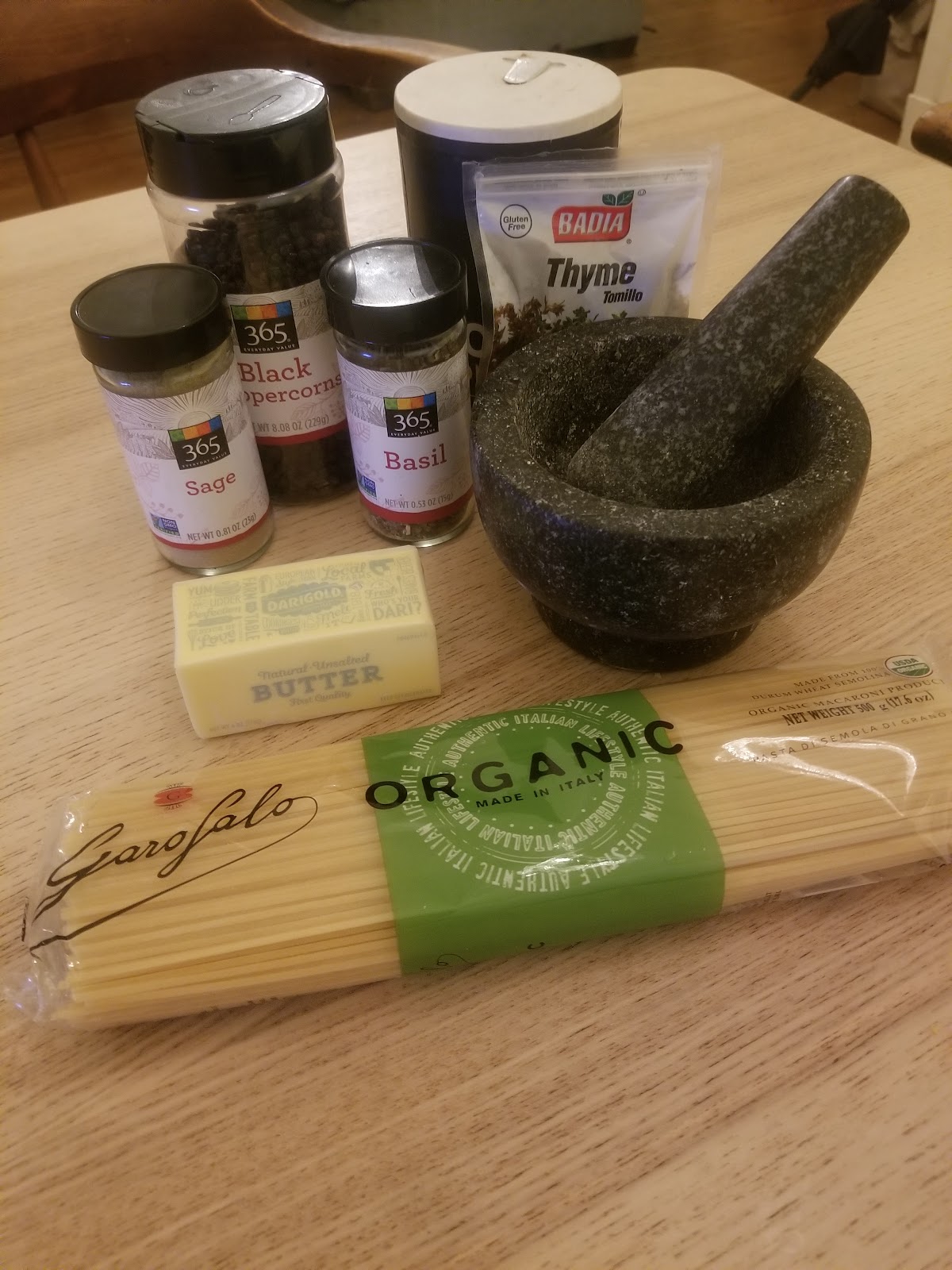
I deeply dislike puzzle games. I also did the equivalent of platinuming this game, completing not just the base but all extra objectives (including speeding through each section, which feels deeply antithetical to the joy I understand others to get from this game). I also have a weird personal relationship with the publisher because of Playdate Pop Up, the videogame arcade I helped found and continue to organize once a year. It seems like that part is working out.I played through all of it not because I like it. I really don't. That helped, in fact. I can't remember what I was doing at the time - some kind of writing or job searching or something - and I needed to have a thing to go to that I wasn't in danger of losing big chunks of time to. Not liking this game meant I rarely spent more than, say, half an hour at a time on it. So I beat it that way and kept poking at it because I needed to decompress. It was reproductive labor. The anarchic goose who obsequiously performs actions presented from a notebook on high was a Clif Bar to me.
32. The Cactus Blossoms - Easy Way
Back in 2016 I called out The Cactus Blossoms as particularly Lynchian. The next year they showed up on Twin Peaks season 3. That felt fun. What's my big prediction for this year?I have none. This is a boring record.
31. Stalker: Solstice
Season 3 of Stalker is the show that Channel Zero was always threatening to be; unbelievably boring and without even loose, speculative threads to grab. It's woke (in the pejorative sense) Channel Zero. It sucks. There's a scene where the vlog lady recreates Leave Britney Alone.Stalker is an anthology series, and this season is about a killer called the Druid stalking a particular apartment building over a 24 hour period on the solstice. A year prior the Druid killed a dude named Kit who was fucking everyone in the building. On the anniversary he hunts a bunch of other people down. Among the players are a middle aged white nationalist and his slutty popular daughter, a lady who vlogs, her closeted husband, his secret lover, a gentrifier who owns a coffee shop and his ace partner who does QA on VR games, a horny teacher, and two families. The two focal characters are high school-aged daughters of these families; one is a refugee from Afghanistan, the other the daughter of a biracial lesbian couple (one of whom set herself on fire the same(?) night as the killing the year prior). Each episode covers about three hours, with plenty of time for flashbacks, over the course of 45 minutes.
For the most part it's one of those slashers where the focus is on the "inventive" kills. This is among the least interesting choices you can make in terms of making me give a shit. The formula is almost always: establish a character as having a single trait then use a physical implement of that trait in the murder. The lady who vlogs, for instance, is sure to have vlogging pop up in her death sequence.
It's a show about sweet deaths that signals aggressively that it has a moral high ground. It is tedious!
Somehow, though, despite playing just about everything wrong the final episode turns out interesting. The reveals are not particularly interesting. But it does lead to a situation where the two focal characters get to play off each other. Which really ends up working. Prior they have the sort of chemistry that makes sense - two high school besties who will probably drift apart over the next five years. In the final episode they really go at it in some interesting ways, though.
Also the ultimate moral of the story is "don't quote retweet no-follower accounts to dunk on them," which is pretty funny.
30. Apex Legends
I played like a half dozen rounds of Apex Legends with randos around when it came out. At least I'm pretty sure I did? As I write this I am genuinely questioning if that was a thing that actually happened. Did I play this game? Well shit.29. Us
As best I can tell, Us is the only movie I saw in theaters in 2019. Which is a bummer because I didn't like it very much at all, and it didn't really linger with me. A far cry from the me who did 2012 in Film, 2013 in Shit, 2014 in Shit, or the me who gave Get Out my #1 film of 2017. Us kind of just didn't work for me. No especially gripping images, one pretty good performance (Heidecker). It felt a lot more like a work that belongs in the Message Horror genre than Get Out ever did, despite being much less obviously allegorical. I trust that the people who love it did so for good reasons, but yeah.28. Sayonara Wild Hearts
When I first lived in the place I currently live, two housemates had a kid together. I spent some time around a baby for the first time in my life. Around a year later, I moved out of the house and the area. I spent two years elsewhere, then moved back into the area. After a year, I moved back into the house. Those housemates had moved out. Their kid turned five this year (I'm sorry if I got that wrong). All three of them still regularly come through for Family Dinner, a monthly dinner I help run (I think that's fair to say?), which is really nice. A regular staple of these dinners is the young one's insistence we play Lovers in a Dangerous Spacetime. It's fun.For the last Family Dinner of the year I seriously over-brined a goose. I didn't quite ruin it, but it was probably ruined for anyone with a more delicate palate than mine (most people). It was shifted off the regular day and it was a hard one for a lot of individual reasons. I made the executive decision, once we'd eaten, that we'd see how they liked Sayonara Wild Hearts, since I certainly didn't feel up to Lovers. They aren't quite fully comfortable with a controller (which is fair), but I figured it might be a good fit.
We ended up making it about 2/3rds of the way through the game, with me or a parent controlling the movement while they hit the QTEs. It became a participatory thing, where people who weren't playing yelled out "HIT!" whenever they needed to press the A button. It was a cute, close moment in a sea of difficult personal shit and changing lives and a lot else.
I think the music in Sayonara Wild Hearts is unremarkable at best, the controls don't feel particularly great (especially in 3D), and the visual aesthetic is very hit or miss. Yeah.
27. No More Heroes: Travis Strikes Back
I played Travis Strikes Back exclusively in co-op, and enjoyed all of it that I played. The gameplay was a solid Marvel Ultimate Alliance-style thing with plenty of interesting variation. The story stuff I remember being compelled by in the moment.I remember jack shit about any of the story stuff, though, and for whatever particular mess of reasons (have I mentioned how unbelievably shitty my 2019 was, at least in certain personal aspects? That didn't help) I never felt compelled to go back to it enough to bridge those gaps in my memory. Which is a bummer.
26. Pretty Little Liars: The Perfectionists
There are precisely two joyous moments in this show. Both end an episode, and both are primarily defined by one of the Pretty Little Liars alumni using the word bitch. It is otherwise pretty dour and rote.Other random notes: it's better than Ravenswood, but not by that much. If this had taken the direction of Ravenswood - a sort of weird gothic horror that explicitly flirted with the supernatural - but kept Alison and Mona as the leads, I think it might have been something genuinely interesting. As a more-or-less straightforward reboot of PLL with a mostly-new cast in a new setting that kept the worst part of the show (teacher-student affair), though, it's kind of nothing.
The stakes are basically invisible until they're the subject of twenty minute conversations and the actors have so little chemistry with each other. The second episode literally opens with a vaseline montage of the series' mean dead girl (who is a boy this time around, and really dead) composed entirely of clips from the first episode. The most compelling characterization happens in the last fifteen minutes of the series finale, and it basically reads like the writers room finally got together to ask themselves what any of these people's motivations are.
That said I did watch all 7 hours of it in a single sitting on Christmas Day, so the threads pulled me through. The biggest weakness is that it's Pretty Little Liars and has to be compared to that. It's also the only reason I watched it. Pretty Little Liars is fucking excellent.
25. The Highwomen - The Highwomen
I really, really want to like this record. I don't think I do much at all though. It feels like something best suited for a specific mood, or in a specific context that I haven't quite found yet. If I do I think my tone would change, but as is after a second listen I went from "high on it in the abstract" to "I may never bother with this again," which is a bummer.24. Super Mario Maker 2
My relationship with Mario Maker 2 was kind of the opposite of its predecessor. In the first Mario Maker I only played Automatic Mario levels and created my own, peppering them with quotes from the Situationist International. It was a pretty magical, dumbass thing to spend my time with.All told I probably put a similar amount of time into Mario Maker 2, but almost exclusively in the endless Mario mode. I got pretty deep into the Normal and Easy modes. The problem, of course, is that I don't have any particular affinity for the 2D Mario games, so I didn't particularly enjoy any of that time.
I did still love having little moments of narrativizing the design decisions made by internet randos; telling myself little stories, immediately forgotten, of how this choice was clearly made for the creator's kid or that one to troll a friend, how a specific joy was probably had by the maker in recreating a memetically popular mechanic with a twist. It provided a version of the fun I had with the first game, a sort of inbuilt critical lens that was itself the gameplay.
If there's a reason to praise the Mario Maker series, that's precisely it. Both games turn on critical engagement as fun, a mode that Nintendo rarely occupies. And I think that's worth holding up, even if the game itself ended up being wildly disappointing to me personally.
23. Scream (Season 3)
Season 3 of MTV's Scream was something I was both incredibly wary of and wanted to be excited about. The first two seasons revolved around the town of Lakewood and a core group of (mostly white) teens, and felt very of the Kevin Williamson-style of slasher films. It paid homage to Craven's Scream films well and built up compelling interpersonal relationships without falling into the trap of escalating too obsessively. The third season did away with all that, completely recasting the show and breaking continuity. It went through a clearly troubled development and release process, including hiring on Queen Latifah as an executive producer and featuring a nearly all Black cast. As much as I was bummed to lose Audrey, Emma, and Brooke, but I do love messy things. Especially when they get Tony Todd (Candyman) and Roger Jackson (the voice of Ghostface) to appear in the same thing.That said, they don't do particularly well by Scream, they don't really let the interpersonal stuff that worked in the first two seasons of the show develop, and they ultimately write a story that felt kind of inane. This Ghostface is obsessed with detailing hypocrisy, which is about as rote a motivation a slasher villain can have. Let no one say criticism is ineffectual; if a bunch of dweebs hadn't decided that Halloween and Friday the 13th were about punishing the sins of teens, Scream would never have existed and we wouldn't have a million horror villains whose goal is to enact or undermine those readings.
They do try for more than just straightforward hypocrisy is bad, especially when they hit the (in narrative terms, shitty) reveal that Deion is actually Marcus, his much more personable and athletic twin, and that he's been living with his dead brother's name and the dreams others projected on Deion for a decade. There's something there about the construction of identity by perception and action and speech (it's the Big Other I guess), and perhaps something about the construction of young black masculinity around athletics and opportunity that I'm not really qualified to speak on. Maybe. I don't know. I might go back and watch the first two seasons of Scream again.
22. Baba Is You
I don't think Baba Is You is that compelling conceptually, visually, or in practice. I do hate puzzle games though, so that explains some of it. I also did not enjoy picking up a controller and playing this game.I did get some enjoyment out of playing it collaboratively. Offering potential solutions and seeing others puzzle things out was significantly more interesting than doing it myself.
If I was to hazard an ideological guess at my tendency toward dislike of puzzle games (as opposed to a personal one, which would be that I'm bad at them which makes me find them frustrating which is uninteresting) it would be that puzzle games are nearly purely competitive, even when they're played alone. They're a distillation of the ways that videogames can tend to be boiled down to an antagonism between the designer(s) and the player(s).
I don't watch competition cooking shows or sports (except sports entertainment, where the performers collaborate to pretend competition) or do much of anything that boils down to "who's better?" because they're boring. Sometimes I play Super Smash Bros against people and the moment I win my brain seizes up to make me worse. One of my more memorable panic attacks happened when I was playing poker with friends at a cabin. It got triggered because I was winning and someone noticed and made a joke about it. I ended up having to excuse myself from hanging out with people who I dearly love for an evening because I got competitive.
The truth of it is that from a skill test perspective I'd probably be better at puzzle games than a theoretical average - because I've played a lot of them and other things and have a general literacy in games' formal language, not because I'm "smart" or what the fuck ever - but I only ever reinforce how bad I am at them. Because they end up being little more, to me, than ways to test whether you can find out which particular dialect a handful of anonymized game designers decided to work in, and best them at it.
Pulling back from that and turning it into a loosely collaborative experience means I can abstract that competition away a little. So I ended up enjoying this a little more.
21. Outer Wilds
I really, really wish I liked Outer Wilds, a game about piloting a thrown-together spaceship in a 22-minute loop and discovering what is happening to your solar system, enough to enjoy playing it.20. Hanna
I probably didn't do myself any favors by watching the first six episodes of Hanna in like, April, and then episodes seven and eight in uh... January. The time away didn't so much dull my memory of the show as confirm that it more or less just is that 2011 film stretched out over six and a half hours. Which is, like, a substantively different thing and one I don't like nearly as much.For example: it has been damn near a decade since I saw the film, but I can't imagine that its dialogue writing was nearly as leaden as the writing at least in the last two episodes of the show. Not because it was ill considered or poorly delivered even, but because there was so much of it and it was so functional. Every moment someone had to be asking someone else what they were doing or where they were going because the show couldn't let the action speak for itself because then you would have a movie and not a television show.
The leaden writing wasn't helped by doubling down on the themes of fatherhood and obligation, which are inherently boring.
On the other hand, the elements of the film that you might leave wanting more are generally done a decent amount of justice. I'm thinking specifically of the relationship between Hanna and Sophie, which I remember being among the most interesting parts of the show.
19. Death Stranding
The amount of times I have caught myself saying that I don't dislike Death Stranding is probably telling. I should also say that I'm only in chapter 5 I believe, so maybe less than halfway through the game. And definitely short of the narrative elements I've heard about that would probably end up selling me on the game way harder because of how often I have heard them described as bad writing.I've also done the game (and myself) a disservice, I think, by trying to run through it as quickly as possible. I haven't really given it time to sink in, to feel like I am actually inhabiting the world. Which is what all of the systems seem explicitly designed to be asking you to do. It's kind of a pain in the ass to do that, though, given how close I have to sit to the television to see literally any of the text. I probably need new glasses (I definitely need new glasses) and I usually tune out whenever anyone talks about text size in a videogame, but jesus.
I do think that Death Stranding's most interesting aspect - the way it pulls in other players creations into your world - is also its most successful. The "walking simulator" aspects are impressive on their own but really only explosive when you take into account that they are there to force you toward reliance on others. The same goes for what of the story I've seen. Every aspect of that game is fine-tuned to push you into connections with others and underscore those connections, and I think that's pretty neat.
Also, before I leave this: I keep seeing hot takes about how "auteur theory" can't apply to videogames, a medium defined by the sheer number of workers required to ship a big (or even medium) budget project. What the fuck are y'all talking about. Have you ever heard of what a film requires. Crews are huge and unionized. Auteur theory is a hermeneutic for critics based on observable phenomena. These phenomena are replicated (with difference (shout out to differance, Derrida)) pretty clearly in videogames. Play a Kojima game, or a Kenji Eno game, or a Kazutoshi Iida game, or a Miyamoto game, or a Tetsuya Nomura game. The people who coordinate those workers are in a position to dictate aspects that can become their signature (shout out to Signature Event Context, Derrida). You can also see the hermeneutic that Auteur Theory largely replaced active in videogames; the studio. Back before those nerds at Cahiers du Cinema made a big deal about Hitchcock everyone was talking about MGM and shit the same way we talk about Ubisoft open worlds. Anyway.
I'm looking forward to messing around with this weird, particular thing some more in the coming year.
18. The Good Place (seasons 3 & 4)
I remember quite liking latest seasons of The Good Place when I was watching them, but, like the rest of the series, it faded from memory fairly fast. High praise comes easy, I think; it's the best sitcom I've ever seen (because I have negative interest in sitcoms), the best straightforward comedy (I don't like comedy as a genre even a little bit), a show that is very solid at balancing its high concept with good character development. The humor allows the character arcs to progress at an uneven pace without feeling unearned and the acting is all exactly where it needs to be.D'Arcy Carden continues to put in work as Janet, a character that should be truly terrible but ends up as the highlight of the show, as does Kristen Bell as Eleanor. Jameela Jamil as Tahani is probably the slowest-burn arc of the series but it seems like she is growing significantly, and William Jackson Harper's Chidi Anagonye is narratively the least propulsed character but he still makes it work.
The thing, I think, for me is that in the moment of watching it feels like the show is constantly making good on its concept. Which, if it wasn't I would've stopped watching immediately (aforementioned distaste for comedy and sitcoms is relevant here). But in retrospect I have a hard time recalling why it feels that way. Nearly all the stuff with Michael and Shawn is like, nothing. Everything I can remember about Maya Rudolph's Judge is basically goofs and tossed-off stakes (which is exactly who that character is and not a bad way to deal with things in and of itself). The good place committee introduced in the fourth season is kind of nothing.
I don't know! It's weird. Maybe it's that the stakes seem empty but the concept seems rich, which if I'm being honest I am 100% in favor of. So yeah, that's why I like the show.
17. Maren Morris - Girl
Girl feels like the kind of album that I could sit with and slowly fall in love with without realizing what was happening. Unfortunately that hasn't happened yet. On one listen it mostly feels like an incredibly competent pop country record. Which there isn't anything wrong with, as far as I'm concerned.If I'm being honest with myself it reminds me of pre-Golden Hour Kacey Musgraves, who I was not a particularly big fan of. But there are certainly worse things to be. Especially since Morris has certified country bangers like "All My Favorite People," making her harder to pin with the "country for people who don't like country" label that I semi-arbitrarily assign then get all fussy about.
Update: after a second listen I am somehow simultaneously higher on it and lower? I don't really see myself coming back to it a ton but I do like it for what it is quite a bit.
16. Ceschi - Sans Soleil
Sans Soleil, as I understand it, was meant to be the middle chapter in a trilogy of Ceschi releases in 2019. The third one still hasn't come out (I think?), but it was meant to also be the end of the name "Ceschi." I suspect that's still going to be the case.I don't really know what people expect out of middle chapters, now that I think about it. For Ceschi, it appears to be a wild, raucous mixture of self-reference - fleshing out ideas and repurposing lines - with heavy community commitments - Sole, Yoni, Knuck Feast, Open Mike Eagle, Mestizo, and POS are on this; so are nearly a dozen others. It's also being less precious about structure. Short songs pile up between a posse cut and a remix of a song from Sad, Fat Luck. One of those short songs is a cover of just the chorus (minus the titular line) of "Hit Me Baby One More Time."
"Old Graves" is good enough that I genuinely assumed it was a cover of an old folk song. Which rules. The work Ceschi does of rewriting "Electrocardiographs" from Sad, Fat Luck into "Yoni's Electrocardiographs" on Sans Soleil, alongside Yoni's new instrumentation, is so smart. The opening to "My Bad" does a great job of letting Ceschi rap in a style he doesn't really indulge that often before launching into The One Man Band Broke Up-era flow that still gets me. "Capsize" is straight out of Twin Peaks season 3, which is such a weird thing to say about a Ceschi song.
As a companion to Sad, Fat Luck, Sans Soleil works way better in the moment. It's always interesting, always willing to strike out in new directions as you're listening to it. Even with the major thread (friends giving eulogies), it ends up less coherent and weighs lighter on the memory. And I guess since these are objective rankings of media that means weighing heavier is objectively more important than in the moment enjoyment.
15. The Ascent to Godhood (JY Yang)
I think I read the whole of JY Yang's Tensorate series in 2019, but the first three were at the very beginning and the final was at the very end. That long gap included reading a bunch of other speculative fiction, which meant getting around to this book was a bit confusing. One of the best things is that, even though I couldn't remember good chunks of the Tensorate world, this did enough reminding and enough new to genuinely enjoy it.The Ascent to Godhood is told with an in-fiction second person in the form of a long story told at a bar. The conceit works pretty well. Like the rest of the series, I tended to find the writing really enjoyable to read but also slippery in hindsight. I might try to do a full reread at some point because each book in this "silkpunk" series is short and breezy and I feel like I wish I remembered anything that happened in them better.
14. Sole & DJ Pain 1 - No God Nor Country
It's been damn near a decade since I wrote about Sole's Lil B-inspired shift toward anarchism, and in that time he's become a bona fide propaganda machine. His music has continually privileged clarity and political messaging over obfuscation, his podcast has become more and more central to his work, and he has moved from street-level activism during Occupy to more infrastructure- and permaculture-inspired movement work. The only thing I dislike about this shift (theoretical quibbles aside) is that it means he plays way fewer shows out in my neck of the woods, but I respect that that life sucks. Plus I was so broke this last year (and the one before) that I wouldn't have been able to make it to them anyway.The biggest shift in this period, musically speaking, has been his collaboration with DJ Pain 1. Starting in 2014 with Death Drive, Pain 1's a producer who emphasizes clean drums that knock, a far cry from his old anticon. style. That clarity reinforces Sole's move toward direct political interventions and toned-down style, which, like most things, has positive and negative effects, as far as my personal listening experience is concerned.
For instance: in many ways, No God Nor Country is Sole's most incisive, righteously angry album yet. But his delivery belies that, verging on laid back. That makes it more clear what he's saying (and I half-imagine it's to do with the fact that he's recording in a home studio with a kid around? and also probably the mix, which sounds very professional but not in an inspiring way) but also lacks an emotive punch that would not just clarify things sonically but create some much-needed variance.
Ironically it's on "Godless" - the song that has the lyric "I'm not shaking my fist or clenching my teeth / or having a heart attack at the age of 33" - that he breaks with the vocal style that dominates the rest of the album, and for that reason I think it's the best song on the record. On the other hand, I think "FTL" and "D.T.A." are two incredibly written tracks that I think suffer greatly from feeling like they need a little more juice.
With a little distance and a few more opportunities to listen, I think I'll come to find these problems are minimized. I'm not positive about that yet, though.
13. Wolfenstein: Youngbloods
If there are two videogame genres I'm most inclined to dislike, it's puzzle games and first person games. There was a period this year when I played four games in succession: The Missing: JJ Macfield and the Island of Memories, this, Untitled Goose Game, and Destiny 2: Shadowkeep. My dislike of puzzle games held fast (The Missing was neat but not really all that compelling to me; Goose Game is at the bottom of this list). Weirdly, two of my favorite games of this year turned out to be first person (shooters no less).Wolfenstein: Youngbloods took a lot of shit for being slight and for "poorly" incorporating RPG mechanics that meant enemies needed to be shot a lot to die. I didn't play it until after the patch meant to address those issues, so maybe I played an entirely different game than most reviewers. I suspect, contrarily, that I just like those aspects, found the story bits really compelling, and am correct. Kidding about the last part.
I don't know, a few months removed, that I have a ton to say about the game. The twins' characterization all felt solid to me, the shooting properly pacifying in that I Play Games To Dissociate In A Controlled Environment sort of way. And honestly I think I'm comfortable leaving it at that.
12. The Bedroom Witch - Diaspora
nb: I used to live with The Bedroom Witch and consider her a close friend.Diaspora is an album I had the benefit of being around to talk to its creator about long before it was in the world. I also got to see the album premiere show, where I had the misfortune of dissociating the worst I have in a very long time and so, despite being physically present, I wasn't able to internalize anything. Partially due to that experience I haven't come back to this record as much as I meant to, even though The Bedroom Witch had nothing to do with my brain.
As I understand it, Diaspora expands a set of key metaphors - the "shadow self," worlds (like "Sea of Insects"), fountains, gates - into a narrative that exists behind both the sonic and lyrical aspects of the songs. The story told in the songs themselves then brings back into focus the metaphorical imagery to talk feeling split between worlds by way of nationality, gender, desire, grief, and life. Don't quote me on any of that.
What I can say confidently is that Diaspora is almost certainly The Bedroom Witch's best sounding album yet. Her capabilities as a pop songwriter have been obvious since her debut Moon Bathing, but over the last half decade she has both refined her songwriting and her sense for the texture of her sounds. If there's a problem I've had with her music in the past, it's that when listening to full albums, it's easy to end up in a sort of fugue. Songs slip past. It's not a purely negative thing - that is a mood worth capturing, or an effect worth building around - but it can end up being less impactful. The only reason I call it a problem is because her live show is so kinetic.
Diaspora totally does away with that problem. Each song feels distinctly of the whole. It's a showcase of her growth and her increasing comfort with her sonic tools, especially as she has started releasing work like Triptych and (the video for) Grieving Spell, where she can channel narrative ideas. That distribution of narrative leaves the songs more space to breathe.
11. The Forest of Love
Even more surprising than Us being the only film I saw in theaters in 2019: The Forest of Love appears to be the only 2019 film I watched outside of theaters in 2019. I knew I ended up watching a lot of older stuff - mostly Westerns, Astaire films, and giallo - but I didn't realize I did that bad. TV takes up a lot of time, I guess. Especially when you march through Pretty Little Liars and Good Eats, front to back (more or less). And then especially if you add Bon Appetit and Giant Bomb's YouTube channels. I had a bizarre media diet in the last year of this decade. Which makes sense, given how wretched of a year it was in many ways.Am I stalling? No! Why would I stall before talking about this film about the sexual allure of serial killers, the trauma of being a high school lesbian, and how all filmmakers are assholes? Why would I stall when talking about Sion Sono, director of Suicide Club and Why Don't We Play In Hell?, both excellent films? Why?
It couldn't possibly be because I am simultaneously deeply unsure of how to talk about this and because I watched it long enough ago (and in certain conditions) that I don't remember everything about it.
How many books have you read where writing is the most painful and transcendent practice imaginable? Poems that luxuriate in the minutiae of word choice? Films that make the struggle of the director appear as ecstatic and profound a thing that since Paul became Saul or whatever? How many have you seen that find filmmakers insufferable nerds, hyperfixated on their own bullshit, with basically no redeemable qualities?
If Why Don't We Play in Hell? couldn't help but valorize its guerrilla, Dogme '95-ass protagonists, Forest of Love takes that failing and pushes it further along the road to being a film about a truly contemptible filmmaker. Which is something I don't know that I've seen successfully done if we're excluding pitiable, misunderstood, or ultimately redeemed from purely contemptible.
It manages this, in part, by weaving together themes of traumatic high school lesbianism (and the concomitant trouble of the sudden death of a (first) lover with the social fascination for serial killers and hucksters. It also does this by being not just a little problematic, hamfisted, and shaggy. It's neat.
10. Ceschi - Sad, Fat Luck
I've been saying (mostly privately, I think?) for a while that I think Ceschi might be our best poet of solidarity. Sad, Fat Luck is an album about bones, processing grief, feeling old, loss, and pushing through - whether to more or to an end. It's personal. The politics are a little lost, a little angry, a little self-aware uncertainty. I'm not close kin with grief or feeling old or broken bones and I'm terrible at pushing through. So much of it still lands for me.I think "Take It All Back, Pt. 1-4" might be Ceschi's best mission statement yet, a freewheeling set of raps and hardcore chorus callbacks that balances rage at systemic and personal disappointments with joy at the act of creation. It also has a verse that just goes -
Children burst into flames- which might be the corniest thing Ceschi's ever written, and not in a particularly good way. But in that same song he says "Never wanted to be anything better than anybody / Only want to think up possibilities for everybody" in his inimitable fast rap style and it's the quintessential Ceschi line.
On a battlefield somewhere
But my insides are numb
And I'm struggling to care
Dude can chew through syllables better than almost anyone else, is on top of that an exceptional guitar player and singer, is clearly dealing with particular kinds of depression and PTSD (these are named, so I'm only armchair diagnosing in the sense of repeating), and still doesn't succumb to braggadocio. He calls for solidarity instead.
"Jobs," "Say No More," and "Any War" are each complex meditations on the state of the world, on friendships and loss and real resistance. It's also just so weird to hear Astronautalis threading the needle through his old survivalist attitudes to come out in favor of toppling confederate statues and knocking out Nazis. What a weird dude.
Sad, Fat Luck ends up reinforcing my thesis, I think. Not because it has any songs like "Bite Through Stone" that explicitly talk about toppling power together. Because it doesn't. But there is more than one way to talk about coming together, and part of that is doing the work of self-reflection and lashing out in productive ways without losing focus (for too long). This record, at least to my ears, does just that.
9. Riverdale (seasons 3 & 4)
If we're being specific to 2019, we're talking Riverdale season 3, episode 9 through Riverdale season 4, episode 9. That's post-quarantine through to where the show currently is. I don't think that's going to matter all that much.As much as I enjoyed the third season while I was watching it, neither the Griffins & Gargoyles nor the Farm plots did a lot for me. They both gave Mädchen Amick plenty to do, which was nice. Cheryl Blossom stayed incredible.
I'm genuinely more excited for season 4 than I have been since watching season 1. The framing narrative is excellent; Archie, Betty, and Veronica are implicated in the death of Jughead. It's so transparently inconsequential that having it happen more or less exclusively in flash-forward shots for the last minute or so every episode is nice. It means that the interpersonal work that drew me to the show in the first place gets to be foregrounded again in a way that it sometimes felt lost through seasons 2 and 3. As an example: the A-plot being reduced to a couple minutes per episode opened up space for what might be one of my all time favorite acting choices/moments of lowkey characterization. It's literally just Betty saying "yes" twice and slapping a bed. It fucking rules.
8. Miranda Lambert - Wildcard
Wildcard is a very different thing from Weight of These Wings (my #7 album of 2016, which is criminally low even though I did review nearly 400 country records that year), which isn't a bad thing. It's much cleaner, more audience-oriented. Which I can respect. It doesn't hit me quite as hard, but it does have more singles and, y'know, a runtime shorter than a feature film. It's a tequila record with a handful of glasses of wine, rather than Weight's smoky whiskeys with a sidecar.If that sounds like I'm saying Wildcard isn't good, I apologize. I'm saying I don't think it's one of the best records of the decade. I like Weight of These Wings a lot.
The singles are really where Wildcard shines. "It All Comes Out in the Wash" is a joyous Lambert song about allowing yourself to fuck up. "Way Too Pretty For Prison" is a classic boyfriend-murder bop with a twist and really great work by Maren Morris. "White Trash" is a mission statement, that old "I'm rich now but I promise I still culturally identify with the working class" joint that Lambert, with all her ample ability, makes fresh. "Bluebird" takes moody lap steel and turns it into a song about how the heat death of the universe couldn't darken her soul (or kill the bluebird in her heart(???)). That might be a little interpretive work on my part.
It's hard to describe what makes Miranda Lambert my favorite working country artist. She has a strong voice that she knows how to use, obviously, and a bunch of songs about murdering abusive men. There's a healthy mix of humor and seriousness, a genuine-feeling joy in the art, a respect for the form that doesn't disappear into sycophancy. She's a crucial component of The Pistol Annies, who are unbelievably good. And she doesn't tend to do wack shit (at least that I'm aware of), which is rad.
But it's also her specificity. She doesn't just do songs about murdering cheating men or murdering abusive men. She does songs like "The House That Built Me," about going home again. Except the narrator never actually leaves the front porch. She sings beautifully about growing up in this house, about her dead dog buried in the yard, but all textual evidence points to her singing this, face to face with a total stranger who never gets a word in. In a song full of sharply drawn images it's the sharpest to me, even if it is only an image by omission.
7. Good Eats (season 15)
I started with season 8 of Good Eats this year. I watched through season 14. I then went back to season 1, and have watched through season 3. I am almost certainly going to watch seasons 4-7 at some point in the next couple months. If you want to give Good Eats a chance (and a large chunk of your time), I would recommend not bothering with anything before season 9. That's just me though. There's a version of this where I talk about how 2019 was my freshman year of the Autodidact's Culinary School. I think that's going to be on my cooking blog Always Bee Cooking though, so I'll hold off.As a television show, I think season 15 of Good Eats slots in fairly well with the rest of the show (despite the very long hiatus). Everything feels less playful, though. The camerawork especially, which is the most undersung aspect of Good Eats. The bizarrely framed shots (especially after Brown moved from the producer's house to a set) set a baseline that allowed the show to dive deep into scientific minutiae or historical sketches (many of which were, well, let's say racially insensitive) or sock puppet asides or even just interesting recipes. That playful camera isn't gone in season 15, but it feels way more reigned in. Which is fitting in certain ways, as all those other parts do as well - the new season feels to me much more "about" the recipes than just about any season that came before.
In many ways it feels more like season 1 than season 14, which is interesting. The long stroll-and-monologue through New York City's Little Italy, discussing the origins of Italian food, seems closer to the awkward introduction to "Steak Your Claim" (s01e01) than the frenetic "Porterhouse Rules" (s14e01). Both older episodes are about a specific cut of beef and how to cook it. Both spend time on describing the cow, the cut, and the cookware needed. Both dig into history. Where "American Classics X: Chicken Parm" (s15e01) and "Steak Your Claim" converge is the pace. There is a bit of languor, a bit of getting to know this guy. "Porterhouse Rules" fires off like a rocket and never comes down. Plus it's shot way better.
All of which is important to me, but I doubt most people. The big thing about season 15 is it does a pretty good job of presenting the kinds of information that Good Eats is good at presenting: a joyful attitude toward cooking, an interest in flavor, and enough basic principles that you can think through even if you don't intend on making what the episode is about. Which is pretty neat.
6. Destiny 2: Shadowkeep
According to Steam, I've played around 250 hours of Destiny 2. I didn't start it until maybe a week after it launched for free on that service, which happened on October 1st. The vast bulk of that playtime was in October and November. If you give me a couple days off for idle time, that means I spent about 8½ days over two months playing Destiny 2: Shadowkeep. That honestly doesn't seem untrue. It's also the title of a great Fellini film, so bonus.Prior to October I had never played a second of Destiny or Destiny 2. It seemed very uninteresting. Then it became free and I needed things to pacify my bad brain. So I started shooting aliens and robots with anonymous other real people, collecting gear, playing through a story with glazed eyes and finding beautiful little pieces of level design, of combat design, of play. Early on I wrote a short Twitter thread about a bit of "no interaction socialization" that struck me as really kind of wonderful. I also described Mars as "the perfect MMO zone" which I tend to continue to agree with.
Here's the pitch: The folks who brought you Halo made one of those, but it's a massively multiplayer online game with about four years of history and now it's free. I bought it. Well, I mean, I didn't buy anything. I did get the free battle pass up to like, level 80 in that season though. I've been hovering around 950 power level since late October. The only way to really advance past that is by doing activities that, practically speaking, require coordinating with other human players. I haven't really done that.
But there's so much smart stuff in Destiny 2: Shadowkeep. It's the way the world has these little hideaways (called Lost Sectors) where you run through a tunnel to instance out of the area and do a little dungeon. Or the way public events produce emergent no interaction social play. Or how Mars' two big areas each have triggerable public events ("Escalation Protocol") that inspire those little events to get bigger and bigger as people come through with powers you've never seen before to wipe out waves of enemies. Or moments where you click "interact" on a random object you've never seen before (despite spending dozens of hours on Nessus) to be transported to a defamiliarized Lost Sector where you try to run a deprecated raid solo ¾ of a dozen times on a time limit before admitting defeat.
On a smaller level, it's the way areas are laid out to keep you from getting turned around without feeling like funnels and the way that enemies stagger when shot and the way that little incentives keep you running around, exploring. It's how they give the player vs. player content its own specific little garden that lets me engage with competitive stuff (see the Baba is You review for context) when I'm up to it and never otherwise. It's so many things that I could list for another thousand words but I don't think that's particularly compelling reading (or writing, if I'm being honest about how many people I expect to read this).
You know what is compelling reading though? Me saying: I dunno, it's real neat, like I do at the end of half these reviews. Deal with it! And add me on Steam I want to try a raid sometime.
5. Sekiro: Shadows Die Twice
In late 2018 I got the platinum trophy for Bloodborne after having never managed to finish a Dark Souls game (despite quite liking the first). In early 2019 I got the platinum trophy for Sekiro. I think I would actually like the Dark Souls games more than Bloodborne or Sekiro if I had actually played them. I am in the camp that says that the Dark Souls series is probably the most important thing in videogames over the course of the last decade. It's inarguable that they've totally upended the way action games are made, both in terms of mechanics and in their surrounding systems and storytelling. Who knows how long that lasts or what aspects ultimately filter out, but so many of them already have that I don't feel premature saying that.Despite the importance I don't know that I give the remotest shit about the storytelling style of Tetsuya Mizuguchi (another clear auteur!). I found nothing particularly affective about Bloodborne or Sekiro as stories. They do both have pretty excellent showstopping moments, which is itself a consequence of storytelling and especially pacing. Which is what I think is the strongest suit of these games. From mechanics to story to post-game content, I don't think they flag in pacing once. Which is pretty fucking incredible, honestly, for games where you are constantly dying and reviving and frustrated and hacking through the same enemies for twenty minutes to get vials or spirit levels or whatever.
I also don't particularly get those moments of elation and triumph from these games, which seems to be a big part for most people. The final (optional) Owl fight was a motherfucker, and the bit with the Snake was excellent spectacle, and taking out Genichiro and Isshin was always hard won. But it always felt more like a sigh and a nod than a leap and a fist pump. And I honestly like that better. But maybe I release tension differently than others for reasons of personal history. I also don't find the stories particularly complex (but then I say that about Kingdom Hearts as well)? What they are is full of detail, some of which is compelling, some of which is not, and none of which should muddy the fact that the narrative arc is from disgrace to obligation fulfilled to making a choice with broad political implications and pretty narrow personal ones.
I guess what I'm saying is that the discourse around these games is all just fucking baffling to me, even as I get it on some level. Or rather, I get why they inspire arguments; I don't get why the understandings that seem to have been reached are the ones that have been reached. It's probably just me. I'm glad that thing about Sekiro being a secret rhythm game seems to have died though, because what the fuck, y'all. The argument you're looking for is that Guitar Hero and Rock Band were actually action games, not that Sekiro is a rhythm game.
You know what fucking ruled about this game? There was this one spot at the top of Mibu Village where you could enter a crevice that the stream had carved out. A purple ninja was right there. I farmed that dude for hours. I barely remember why. I would run down, kill him, run up, reset, run down, repeat. I must have fought him a hundred times. Maybe a dozen of those fights were identical, and those were only the ones I got perfect. I had all of his moves down within a few runs. I was still dropping one resurrection point by the end. Those five or so moves, coupled with the environment and just enough reactive action brought together so many possibilities. Parrying the multi-part strikes never got old. What a good game.
4. 100 Gecs - 1000 Gecs
This review was commissioned by BW! You can find out how to commission me by going to my Patreon. Sorry it's late BW.You can see my initial reactions to 1000 gecs here.
In those reactions I dropped some names: satanicpornocultshop, DJ Sharpnel, BrokeNcyde, Lil Peep. I'm not super familiar with Peep's work, but I've listened to the rest a lot. I also brought up brostep, a genre I personally still love. I find nothing so compelling as the work Hyperdub and Kode9 pioneered being filtered through mass culture, typifying the latent, transformative aggression into masculine resonances (or menace? I'm not at all opposed to the critique of brostep culture and not unaware that it is repugnant). It hits a certain expression of frenzy and anger that I find difficult to access in my daily life - even when it is called for. The kind of transformative rage that powers (and sometimes overpowers) organizers is locked away for me for reasons of biography, temperament, historical social positioning, and more.
DJ Sharpnel's music actually hits me in a similar way. Nerdcore (not the white rapper one) fka J-core (or Japanese Happy Hardcore) takes that simmering aggression and filters it through a more ostensibly joyous aesthetic. It's high BPMs and anime samples. It's punchy in a positive way. Especially Sharpnel. If I'm being honest I end up preferring artists like hardcore tano*c and RoughSketch for being stronger examples of that aggression, but that's just personal shit. What Sharpnel offers to the comparison to 100 gecs (as I'm constructing it now, on the fly, in relation to myself) is the sampling. The particular vocal effects that the singer of 100 gecs employs are reminiscent of plenty of things - "chipmunks" versions of songs on YouTube are probably the most immediate association - but, for me, they fall in the sonic/associational realm of sampling.
(a quick aside, and we're back in the previous paragraph: I have sort unintentionally learned nothing about 100 gecs. I have a vague idea it's two people. I literally dunno shit tho.)
If we're talking sonic similarities though 1000 gecs is way closer to satanicpornocultshop. The vibe is way off, which is why DJ Sharpnel came to mind. BrokeNcyde is the opposite, and adds a crucial component that is also true of brostep: whiteness. And another step that is true of nothing else here, I don't think: teenness. Maybe Lil Peep, but again, I'm not super familiar.
Comparisons aside: Every song on this record goes. I love the way musical ideas are picked up and tossed aside. I love some of the drums (the thickest ones, specifically) so much. The way they manage to keep a specific sonic throughline while discarding ideas left and right is inspirational and enjoyable.
I think if this record has a three song run (go read QRoCC if you want to see me lay out the theory, I don't remember where) it's, shockingly, the last three. "gecgecgec" takes the joy of discarding and wraps it all the way around to points where continuing a particular musical thread itself becomes funny. "hand crushed by mallet" strikes a bizarre treaty between goofy and angry to produce joyously uncanny pop music. And "gec 2 Ü" closes out a cute song about texting "u up" with stadium rock drums that go full nerdcore over Cascada synths. It's a delight.
3. Kingdom Hearts III
Kingdom Hearts III is an itch in the back of your brain. It's a sense that things must have come to a close, even knowing they certainly haven't. It's nothing that means everything.It's the perfect end to the 10-game trilogy that is Kingdom Hearts. I would love to have more of this weird thing. I would also love if it disappeared from everything but our collective memories forever.
This year I wrote about how Kingdom Hearts is a series about threes. In that essay, I also talked about how it is a series about making friends without having a self. And how it's a storytelling reflection of the director's prior work (as a character designer). And about the enclosure of the commons in 15th century Britain. And stories.
Go read that essay, if you want to know my thoughts on this fucking series, because I am incapable of having thoughts on this particular game outside of them. Aside from one: I'm going to buy my first DLC ever when Re:Mind comes out.
2. Hexarchate Stories (Yoon Ha Lee)
The more I've been able to sit with Hexarchate Stories the more I've really appreciated what it does, both as a collection of short stories and a sideways view into the Machineries of Empire trilogy. I wrote a full review of it for Strange Horizons, which I somehow hadn't written for in like two and a half years.I don't have much to add to that review at this point (I'm only like a month away from having written it), so I'll reiterate what I said there: Machineries of Empire is the best of the speculative fiction trilogies of the 2010s. It shits on the Ancillary books (I talk about why I don't love them a bit somewhere in this 2 hour podcast), and I even prefer it to the Broken Earth trilogy. You should read it if you haven't, and if you enjoyed it you should consider picking this book up.
1. Taylor Swift - Lover
I was not a big fan of Reputation. I think "Getaway Car" is great and "Delicate" ended up worming its way into my heart. The most indicative thing about that album is how incredible the prechorus on "Look What You Made Me Do" is, and the atrocious chorus that follows. I did get to see her live on that tour though which was nice.Lover is kind of a hard pivot. It's still goofy and awkward in ways that initially put me off, but the album as a whole grew on me immensely even from the second listen. Specifically the title track. I found it insufferable the first time through. It may now be my favorite song of 2019. That "Ladies and gentlemen will you please stand / with every guitar-string scar on my hand / I take this magnetic force of a man to be my / Lover" fucking melts. I regularly wake up with "The Man" stuck in my head, as much as the basis of that song feels like middle school feminism (note: that's not really fair, even if it's kinda true. It's specifically because of Reputation and Swift's public feud with Kanye West, and how this song holds space for a reading that it is still subliminally about him, and how that middle school feminism butts up against a wild ignorance of anti-black racism (at best) that actually grates). "Paper Rings" bops along so joyously. "Miss Americana & the Heartbreak Prince" and "Cornelia Street" are perfect Taylor Swift album cuts. I kind of fuck with this record really hard.
"I Forgot That You Existed" is a good song that is also the worst possible album opener. I get that it's meant to signal a move away from the celebrity-drama of Reputation, but as far as I'm concerned even reminding the listener of that shit is a net negative. It's lucky that it's immediately followed by "Cruel Summer," which hits Swift's best aspects so well. The pop songwriting with impeccable phrasing, the buoyant chorus, the reprise that works so well -
I'm drunk in the back of the carI was trying to talk about the negatives. So. "ME!" is pretty embarrassing. Sometimes I think it's goofy fun, other times I think it's unbearable. "You Need to Calm Down" has a lot of the same problems as "I Forgot That You Existed" - Taylor Swift is not a savvy wielder of slang. I can't imagine a less convincing phrasing of "say it in the streets it's a knockout / but you say in a tweet, that's a cop out." I also become less and less convinced that I have any idea what she means when she says "shade never made anybody less gay," but I guess that's a shirt now or whatever. Also "London Boy" is not great.
And I cried like a baby coming home from the bar
Said "I'm fine," but it wasn't true
I don't wanna keep secrets just to keep you
And I snuck in through the garden gate
Every night that summer just to seal my fate
And I screamed, "For whatever it's worth
I love you, ain't that the worst thing you ever heard?"
All of which ends up paling in comparison, for me at least, to just how fucking good so much of this record is. "Paper Rings" and "Cruel Summer" fucking bang. "Lover" is so charming. "Soon You'll Get Better" and "Cornelia Street" are so good at wistfulness while being joyous to listen to. The fucking "Go! Fight! Win!" cheers in "Miss Americana & the Heartbreak Prince?" Come on. Come on!
I said on Twitter a while back that if Lover ended up being my favorite record of the year there might be a bit of a pattern - Kesha, Kacey, Taylor - that, just maybe, might have more to do with who I've been and who I'm becoming over the course of the last few years. That being a white girl who sings country. I don't disagree with that joke. But then that was also kind of the whole thing with the Valentine's Day EPs (pre-compilations) so I've been on this trajectory for a minute. If I'm honest with myself, I don't think Lover is going to have the same staying power as Rainbow or Golden Hour, but goddamn if it didn't somehow end up being my favorite thing I heard (or played or watched or read) that came out in 2019 that I experienced.
Have I mentioned how good "Paper Rings" is? I love the hell out of that song.